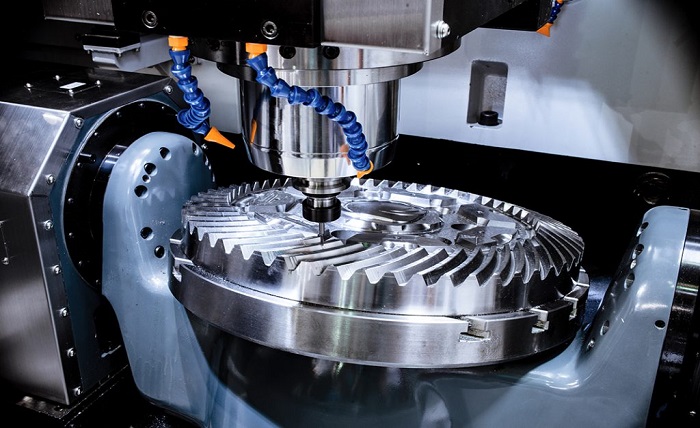
Turning an idea into a finished product takes careful planning, repeated testing, and constant refinement. One of the biggest challenges manufacturers face is reducing the time between concept and market launch without sacrificing quality. Prototype CNC machining has become an important part of this process because it allows engineers and designers to create accurate, functional parts quickly. Instead of relying on lengthy manual methods or waiting for production tooling, businesses can evaluate designs, identify issues, and improve products much faster.
Many manufacturers work with experienced providers such as Rapid Axis to produce precision-machined prototypes that closely match the final production parts. This approach supports faster decision-making throughout product development while maintaining high levels of accuracy.
Why Prototype CNC Machining Matters in Product Development
Prototype CNC machining involves producing a physical part directly from a digital CAD model using computer-controlled machine tools. Unlike additive manufacturing, CNC machining removes material from a solid block, creating parts with tight tolerances and excellent surface finishes.
Because prototypes are manufactured from production-grade materials, engineers can assess how a component will perform under real operating conditions. This provides valuable insight before moving into full-scale manufacturing.
According to the National Institute of Standards and Technology (NIST), identifying design issues during the early development stages can significantly reduce manufacturing costs and prevent expensive redesigns later in production.
Faster Design Validation
One of the greatest advantages of CNC machining is the speed at which new designs can be tested. Instead of waiting weeks for custom tooling or moulds, manufacturers can often receive prototype components within days.
This rapid turnaround allows design teams to compare multiple versions of a product before selecting the best option. Engineers can inspect dimensions, test assembly, and verify functionality before committing to mass production.
The result is a smoother development process with fewer unexpected problems later in manufacturing.
Improved Accuracy Reduces Costly Errors
Precision is essential during product development. Even a small dimensional error can affect performance, assembly, or safety.
Modern CNC machines routinely achieve tolerances within a few microns, making them suitable for industries such as aerospace, automotive, electronics, and medical manufacturing.
Through its rapid prototyping capabilities, Rapid Axis helps companies produce prototypes that closely represent final production components. This level of precision allows engineers to validate fit, strength, and functionality before investing in expensive production equipment.
Research published by the American Society of Mechanical Engineers (ASME) highlights that early verification of dimensional accuracy helps reduce production defects and improves overall manufacturing efficiency.
Supporting Multiple Design Iterations
Few successful products are perfect on the first attempt. Most undergo several rounds of improvements before reaching the market.
Prototype CNC machining makes these design revisions practical because updated CAD files can be programmed directly into CNC equipment without creating new tooling.
Typical improvements during this stage include:
- Refining dimensions, improving strength, reducing weight, enhancing assembly, and testing different materials before final production.
Each iteration brings engineers closer to an efficient, reliable design while avoiding the delays associated with traditional manufacturing methods.
Material Testing Under Real Conditions
Unlike some rapid prototyping methods that use plastic resins, CNC machining supports a wide range of engineering materials.
Common materials include:
- Aluminium
- Stainless steel
- Titanium
- Brass
- Copper
- Engineering plastics such as PEEK, Delrin, and Nylon
Using production-grade materials allows manufacturers to perform mechanical testing, thermal evaluation, fatigue analysis, and functional testing before production begins.
This provides confidence that the final product will meet performance expectations in real-world applications.
Shortening Time to Market
Bringing products to market quickly has become a major competitive advantage across nearly every industry.
A study by McKinsey & Company found that companies introducing products ahead of competitors often capture greater market share and improve long-term profitability.
Prototype CNC machining contributes to faster product launches by reducing delays between design, testing, and manufacturing. Since no custom tooling is required, production schedules become more flexible, allowing businesses to respond quickly to customer demands or design changes.
This flexibility is especially valuable in industries where technology changes rapidly or customer requirements evolve frequently.
How Digital Manufacturing Improves Collaboration
Modern CNC machining is closely connected with digital engineering workflows.
Design teams create CAD models, engineers review specifications, and machinists convert those files into machining programs with minimal manual intervention.
This digital process improves communication between departments because everyone works from the same design data. Changes can be implemented quickly without redrawing technical documentation or modifying physical tooling.
Many manufacturers, including Rapid Axis, integrate advanced CAD/CAM systems into their production workflow, helping reduce communication errors and maintain consistency throughout development.
Quality Assurance Throughout Development
Prototype machining is about more than producing a physical component. Quality inspection also plays an important role.
Many manufacturers use Coordinate Measuring Machines (CMM), laser scanning, and advanced inspection equipment to verify that finished parts match the original design specifications.
Detailed inspection reports allow engineers to identify dimensional variations before production begins.
This process improves confidence during product development while reducing the likelihood of expensive manufacturing corrections later.
Industries That Benefit from Prototype CNC Machining
Prototype CNC machining supports a wide variety of industries where precision and reliability are essential.
Some of the sectors that regularly use CNC prototypes include:
- Aerospace
- Automotive
- Medical device manufacturing
- Industrial automation
- Defence
- Consumer electronics
- Robotics
- Renewable energy
Each industry benefits from the ability to evaluate product performance before committing to large production volumes.
Final Analysis
Prototype CNC machining has become an essential part of modern product development because it combines speed, precision, and flexibility within a single manufacturing process. By producing accurate prototypes from production-grade materials, engineers can validate designs, improve product performance, and identify potential manufacturing issues much earlier in development.
Working with experienced manufacturing partners such as Rapid Axis helps companies move efficiently from concept to production while maintaining consistent quality standards. As industries continue to demand shorter development cycles and greater product reliability, prototype CNC machining will remain one of the most effective ways to reduce delays, improve design confidence, and accelerate the journey from idea to finished product.